top of page


Search


¿Qué es la adicción? | What is Addiction?
La adicción es una afección de salud crónica que afecta a más de 48 millones de personas en todo el país. La adicción tiene componentes biológicos —como sus efectos en el cerebro—, así como componentes psicológicos y sociales. Este enfoque —denominado biopsicosocial— reconoce que existen múltiples vías que conducen a la adicción, tales como la predisposición genética, factores psiquiátricos y psicológicos, y mecanismos de afrontamiento poco saludables. En el tratamiento de la
5 days ago


Infografía de Cómo la Adicción Secuestra el Cerebro | How Addiction Hijacks the Brain Infographic
La adicción es una afección médica compleja que afecta el funcionamiento del cerebro. Comprender la ciencia que subyace a la adicción puede ayudar a reducir el estigma, fortalecer las iniciativas de prevención y aumentar la conciencia sobre por qué la adicción no es simplemente una cuestión de fuerza de voluntad. El alcohol y otras drogas pueden afectar áreas importantes del cerebro, incluido el sistema límbico —que ayuda a regular los instintos de supervivencia y la recompe
6 days ago


Adicción y el Cerebro | Addiction and the Brain One-Pager
La adicción es una afección médica que afecta al cerebro y modifica el comportamiento. Comprender cómo la adicción repercute en el cerebro es un paso importante para prevenir los trastornos por consumo de sustancias, reducir el estigma y apoyar a las personas en su camino hacia la recuperación. El consumo de sustancias puede afectar áreas del cerebro responsables de la toma de decisiones, la motivación y la recompensa. Con el tiempo, el consumo reiterado de sustancias puede
6 days ago


How Addiction Hijacks the Brain Infographic
Addiction is a complex medical condition that affects how the brain functions. Understanding the science behind addiction can help reduce stigma, strengthen prevention efforts, and increase awareness of why addiction is not simply a matter of willpower. Alcohol and other drugs can affect important areas of the brain, including the limbic system, which helps regulate survival instincts and reward, and the cortex, which plays a role in decision-making and impulse control. Repe
Oct 15


Addiction and the Brain One-Pager
Addiction is a medical condition that affects the brain and changes behavior. Understanding how addiction impacts the brain is an important step toward preventing substance use disorders, reducing stigma, and supporting individuals on their path to recovery. Substance use can affect areas of the brain responsible for decision-making, motivation, and reward. Over time, repeated substance use can change how the brain functions, making it increasingly difficult for a person to
Oct 15

Estimating Addiction Knowledge and Stigma in America with Dr. Valerie Earnshaw
Despite growing awareness of addiction, important knowledge gaps remain that can influence how people respond to and treat people who are impacted by substance use disorders. Misconceptions about addiction can influence how people respond to those who are struggling, shaping everything from personal interactions to support for policies that expand access to care. Better understanding public attitudes toward addiction is an important step in reducing stigma and improving recov
Aug 25


Changing the Conversation: How Montgomery County ADAMHS Is Reminding Us that Stigma is "Out of Style"
Across the country, stigma remains one of the greatest barriers preventing people from seeking help for substance use disorders. In Montgomery County, Ohio, the Alcohol, Drug Addiction and Mental Health Services (ADAMHS) Board is tackling this challenge head-on through its bold public awareness initiative, Stigma Is Out of Style. After joining Addiction Policy Forum’s Anti-Stigma Initiative, Montgomery County ADAMHS piloted a community survey in partnership with the Addiction
Jun 30
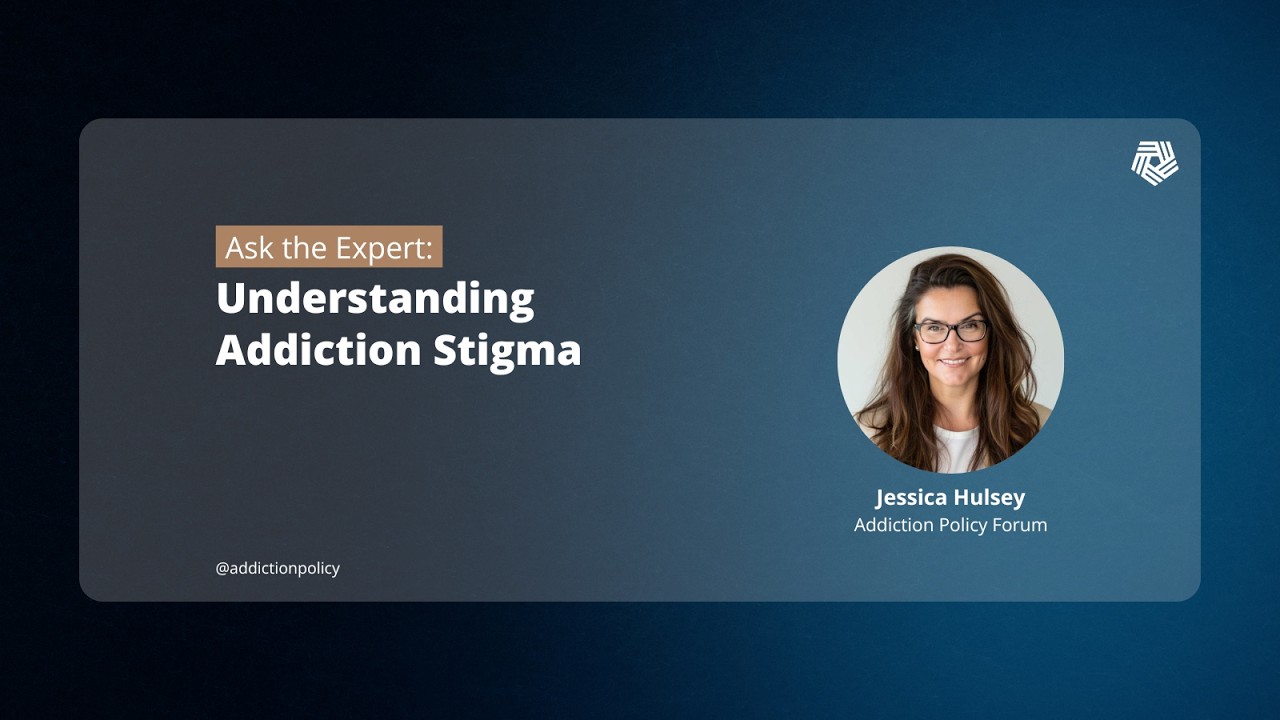
Understanding Addiction Stigma with Jessica Hulsey
Despite decades of research and growing public awareness about substance use disorders (SUDs), stigma continues to affect how people are treated, whether they seek help, and how communities respond to addiction. Stigma occurs when people are viewed as different, less worthy, or defined by their illness, leading to stereotypes, prejudice, and discrimination. Stigma can discourage people from accessing treatment, create barriers to recovery, and contribute to discrimination in
Jun 30


[Webinar] Findings from Addiction Stigma in America: How Public Knowledge Shapes Attitudes Toward Recovery
This webinar explored findings from a nationally representative study examining addiction knowledge in the United States and how it shapes attitudes toward individuals in recovery and support for public health policies. Conducted by the Addiction Policy Forum, Gallup, and researchers from the University of Delaware, the study identified critical gaps in addiction knowledge. Findings showed that nearly one in four U.S. adults did not recognize addiction as a health condition,
Jun 2


Addiction Stigma in America: How Public Knowledge Shapes Attitudes Toward Recovery
The Addiction Policy Forum and Gallup released Addiction Stigma in America: How Public Knowledge Shapes Attitudes Toward Recovery, featuring findings from a nationally representative study examining Americans’ addiction literacy and how it influences stigma, attitudes toward individuals in recovery, and support for public health policies. The report is also available on Gallup's website. The study included a nationally representative sample of 5,097 U.S. adults surveyed throu
Jun 2


1 in 4 U.S. Adults Don’t Recognize Addiction as a Health Condition
New Addiction Policy Forum and Gallup Study Released Findings from a nationally representative study show that nearly 1 in 4 U.S. adults (23%) either disagree or do not know that addiction is a health condition. Individuals who did not recognize addiction as a health condition were significantly less likely to believe substance use disorders (SUDs) are treatable by healthcare professionals, that early intervention works, or that medications are effective treatments to treat a
Jun 1


New Study Utilizing AI Highlights Stigma Around Medications for Opioid Use Disorder
Study using AI to analyze community coalition meeting minutes from the HEALing Communities Study (HCS) identifies key themes and how they intersected with decisions when selecting evidence-based practices (EBPs) to reduce overdose deaths.
Sep 17, 2025


The Effects of Stigma on Naloxone Attitudes and Policy Endorsement
Naloxone is a life-saving medication that reverses opioid overdoses by blocking the effects of opioids and reversing overdose symptoms...
Jul 28, 2025


New APF Report Explores the Effect of Stigma on Naloxone Access and Policy Support
Findings suggest that higher levels of stigma are associated with decreased support for naloxone availability Bethesda, MD (July 29, 2025) — The Addiction Policy Forum released a new report today that examines how addiction-related stigma is associated with attitudes toward naloxone access and policy endorsement. For the study, Addiction Policy Forum and researchers from the University of Delaware designed and administered a survey to 57 partner organizations, ranging from pu
Jul 28, 2025


Multilingual Stigma Awareness Project Webinar
The Addiction Policy Forum, in partnership with ECORN-MO, conducted a webinar that explored the stigma surrounding addiction and...
Jun 26, 2025


Fall 2025 Anti-Stigma Institute–In DC
Now Open: Fall 2025 Anti-Stigma Institute– Register to Join Us in DC to help decrease stigma within your community, organization, and state.
May 27, 2025


Case Study: Findings from the SalusCare Community Survey on Addiction
SalusCare piloted a community survey in partnership with the Addiction Policy Forum to better understand substance use disorder (SUD) stigma, including attitudes, misconceptions, and policy support related to SUD services. Stigma remains one of the greatest barriers preventing individuals with SUD from seeking treatment and achieving long-term recovery. A total of 269 individuals responded to the survey administered by SalusCare between December 8, 2023, and June 6, 2024. The
May 15, 2025


Fall 2025 Anti-Stigma Institute: Registration Open
Registration is now open for the 2025 Anti-Stigma Institute , scheduled for September 29 & 30, 2025, in Washington, D.C. Institute...
May 14, 2025


Case Study: Findings from the Tuscarawas County Health Department Community Survey on Addiction
Tuscarawas County Health Department piloted a community survey in partnership with the Addiction Policy Forum to better understand substance use disorder (SUD) stigma, including attitudes, misconceptions, and policy support related to SUD services. Stigma remains one of the greatest barriers preventing individuals with SUD from seeking treatment and achieving long-term recovery. A total of 361 individuals responded to the survey administered by Tuscarawas County Health Depart
Apr 22, 2025


Case Study: Findings from the Dartmouth Health Community Survey on Addiction
Dartmouth Health piloted a community survey in partnership with the Addiction Policy Forum to better understand substance use disorder (SUD) stigma, including attitudes, misconceptions, and policy support related to SUD services. Stigma remains one of the greatest barriers preventing individuals with SUD from seeking treatment and achieving long-term recovery. A total of 474 individuals responded to the survey administered by Dartmouth Health between November 10, 2023, and Ja
Mar 19, 2025
bottom of page